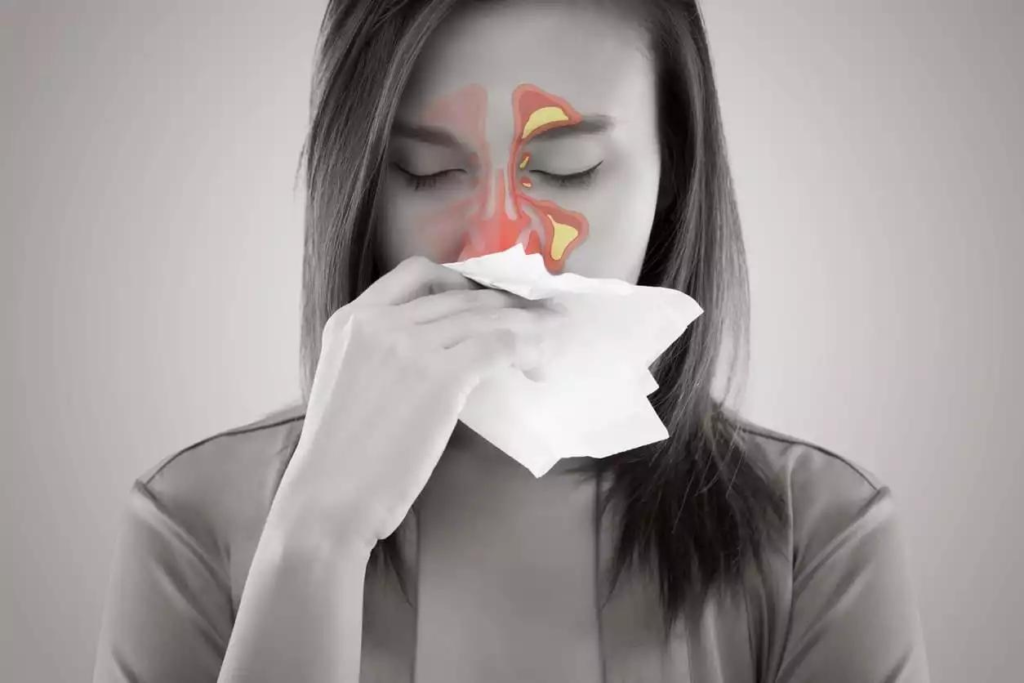
Many people say the same thing:
“Every time I get a cold, it goes straight to my head.”
- The sneezing settles.
- The fever reduces.
- But the nose remains blocked.
- There is heaviness around the eyes.
- Post-nasal drip continues for weeks.
- And this keeps repeating.
In cities like Chennai, where humidity, sweating, dust exposure, and frequent temperature shifts between outdoor heat and indoor AC are common, these recurrent sinus patterns are seen very often.
If this sounds familiar, it may not be “just a cold.”
Acute Cold vs Chronic Sinus Pattern
A simple viral cold usually improves within a few days.
But when:
- Symptoms recur every few weeks
- Every cold becomes sinus congestion
- There is baseline morning sneezing even between episodes
- The nose never feels completely clear
It often indicates a chronic allergic or sinus tendency.
The acute infection is only the surface.
The underlying sensitivity remains.
Signs It’s More Than a Temporary Cold
You may be dealing with a chronic sinus pattern if:
- You need antibiotics repeatedly for similar symptoms
- Decongestant sprays give only temporary relief
- Head heaviness returns with every weather change
- There is thick mucus or post-nasal drip that lingers
- You feel “blocked” even when you’re not acutely sick
Frequency matters more than intensity.
If something keeps returning, it deserves evaluation.
Why Temporary Relief Doesn’t End the Cycle
Antibiotics, anti-allergic tablets, or nasal sprays may reduce inflammation temporarily.
But if the deeper pattern — allergic sensitivity, mucosal reactivity, or digestive–immune imbalance — is not addressed, the cycle continues.
Each episode becomes a repeat of the previous one.
Over time, people start believing:
“My sinus is just weak.”
In reality, it is a recurring inflammatory pattern.
How Chronic Sinus Conditions Are Evaluated
Chronic sinus and allergic disorders are not assessed based on one episode.
They are evaluated based on:
- Frequency of recurrence
- Timing patterns
- Baseline sensitivity between episodes
- Trigger patterns
- Long-term trend of improvement
The first goal is not instant disappearance of symptoms.
It is reduction in frequency and intensity over time.
When recurrence reduces, quality of life improves.
When Should You Seek Evaluation?
If:
- Every cold turns into sinus congestion
- You rely on repeated medication cycles
- Your nose never feels completely clear
- Symptoms disturb work or sleep
It may be time to look beyond the “acute cold” label.
Chronic sinus and allergic conditions can be managed effectively when the pattern is properly understood.
A Structured Approach to Recurrent Sinus Problems
In chronic sinus and allergic conditions, the focus is not only on relieving the current blockage.
The approach involves:
- Understanding the pattern of recurrence
- Identifying baseline sensitivity between episodes
- Tracking reduction in frequency over time
- Supporting the body’s response rather than only suppressing symptoms
When treatment is structured around long-term trend improvement, the goal shifts from “relief for this week” to “fewer episodes over the coming months.”
This is especially important in people who have been experiencing repeated sinus congestion for years.